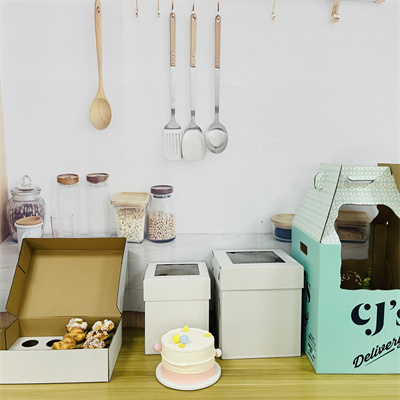
Sunshine Packaging - Standard Cake Box Size Sharing
Whether you're a baking novice or an experienced home baker, and have made a few homemade cakes—you've probably heard the term "cake base." For beginners in the cake baking industry, they might think it's a cake drum, but what thickness qualifies as a drum? Why do we need it? How do we choose the right base? There are even some professional techniques to make your cakes look perfect. Every cake needs a beautiful base and a sturdy material.
First: What exactly is a cake drum?
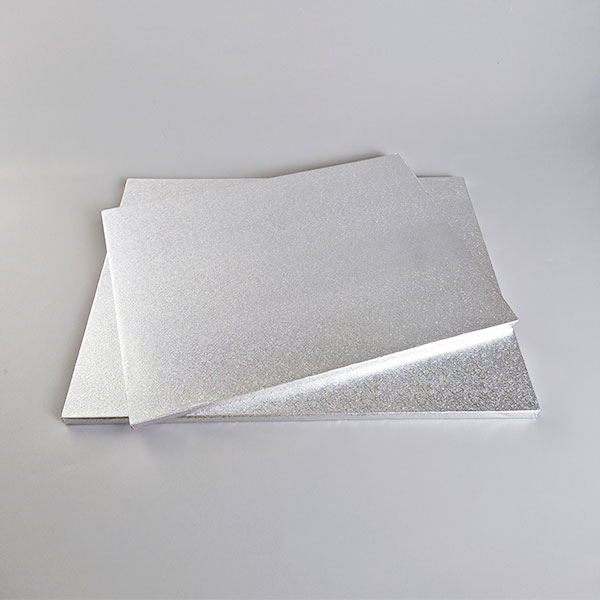
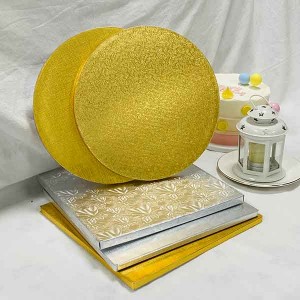
A cake base is a thick, sturdy base, typically made of a material about 12mm thick, used to hold the cake, providing support, stability, and enhancing its appearance. It prevents your creation from being negatively affected by the cake base. You should never make a cake without a cake base; it's dangerous and extremely risky (especially for large or delicate cakes!). It's that important.
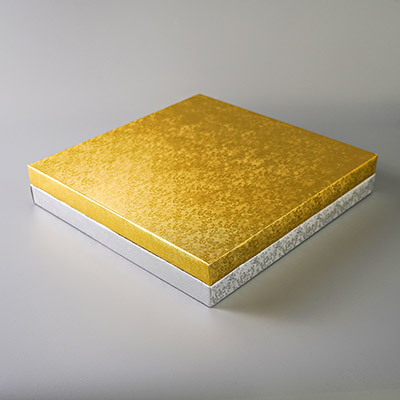
I know what you're thinking: "Wait, isn't that just a cake base? If I could do it without a cake base, just put the cake on a turntable or a cake board?" Oh, I get it—I used to confuse the two all the time. But the key difference is: cake bases are thin (usually only 2-3 mm thick, made of white cardboard or double grey cardboard), suitable for small, lightweight cakes, such as single-tier birthday cakes or a tray of cupcakes. Cake bases, on the other hand, are much thicker—up to 10-12 mm thick—made of ultra-strong materials like compressed cardboard, medium-density fiberboard, or multi-layered corrugated board. They are designed to support heavier cakes—such as multi-tiered wedding cakes, large fruitcakes, or cakes decorated with lots of fondant, buttercream, and various elaborate decorations. Some cakes are works of art and come with matching accessories and toppers.
6mm - Small corrugated cake drum
10mm - Medium corrugated cake drum
12mm - Large corrugated cake drum
15mm - Suitable for cake drums with 3 or more tiers
Why do you need a cake drum?
Honestly, have you ever encountered this situation when baking cakes: the cake isn't finished yet, but the sides are already uneven, and you need to improve its stability? If you're just making small, simple cakes for home baking, a cake stand might be enough. But if you want to improve your skills, showcase your talents at large weddings or parties, or even start your own baking business, then a cake stand is indispensable. Here's why:
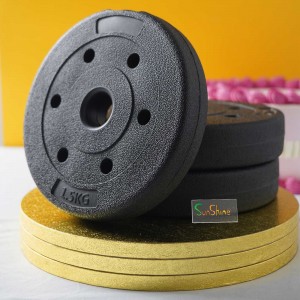
First and foremost, stability is paramount. Have you ever made a two-tiered cake? Some bakers use three straws or wooden pegs to support the cake, but this increases costs. If the cake isn't stable enough, it might tilt or even collapse. A cake stand solves this problem, saving you the cost of pegs. A thick, sturdy cake stand can generally prevent the cake from bending, deforming, or collapsing, maintaining its shape and preventing the frosting from crumbling even when the cake is heavy.
Secondly, cake stands also offer significant advantages in transportation. We've all experienced this: spending hours decorating a beautiful cake, hoping everyone at the party can enjoy its deliciousness and share in its joy, like at a wedding. Every couple is immersed in joy, and I don't want the cake to spoil that joy during transport. Driving long distances makes me constantly worry about it slipping or getting damaged. A cake stand provides stable support for the cake, and some people even choose other stable boxes, which is also an aid. Some customers are very particular about the size of the cake tray.
For an 8-inch cake box, choose a 7.95-inch cake drum, just 0.045inch distance.
For a 10-inch cake box, choose a 9.95-inch cake drum, just 0.045inch distance.
For a 12-inch cake box, choose an 11.95-inch cake drum, just 0.045inch distance.
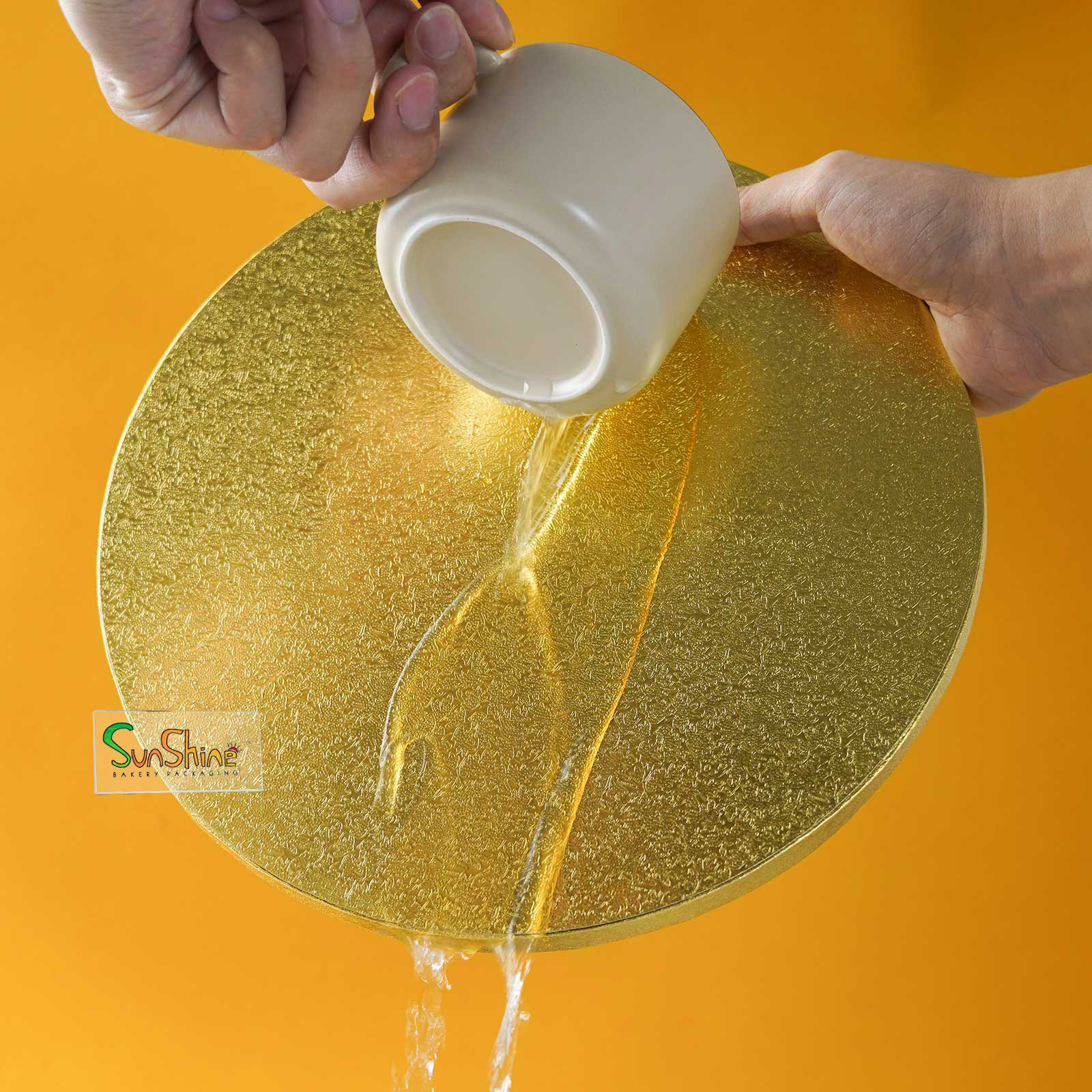
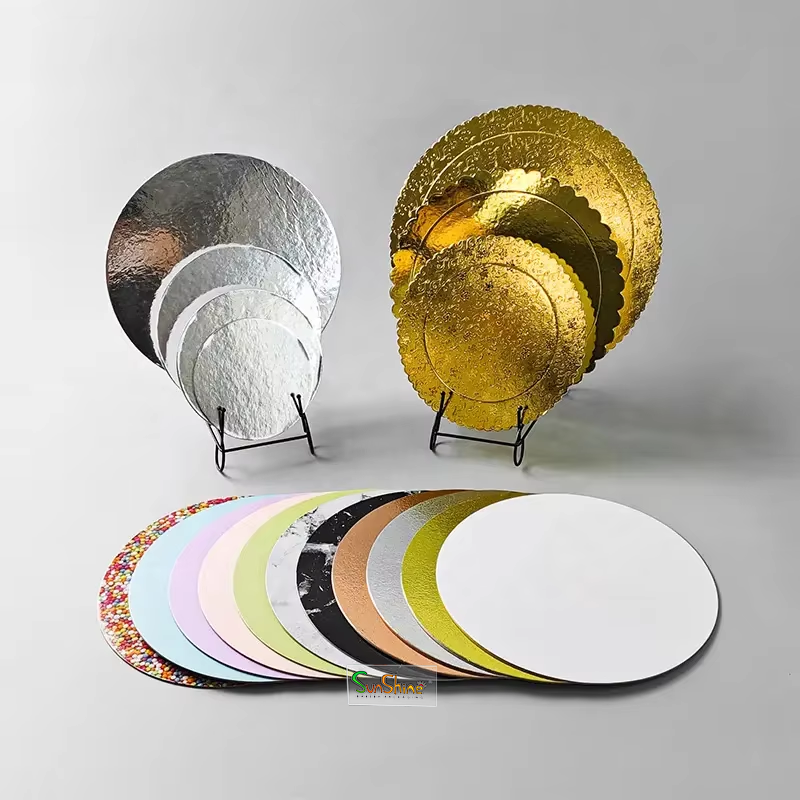
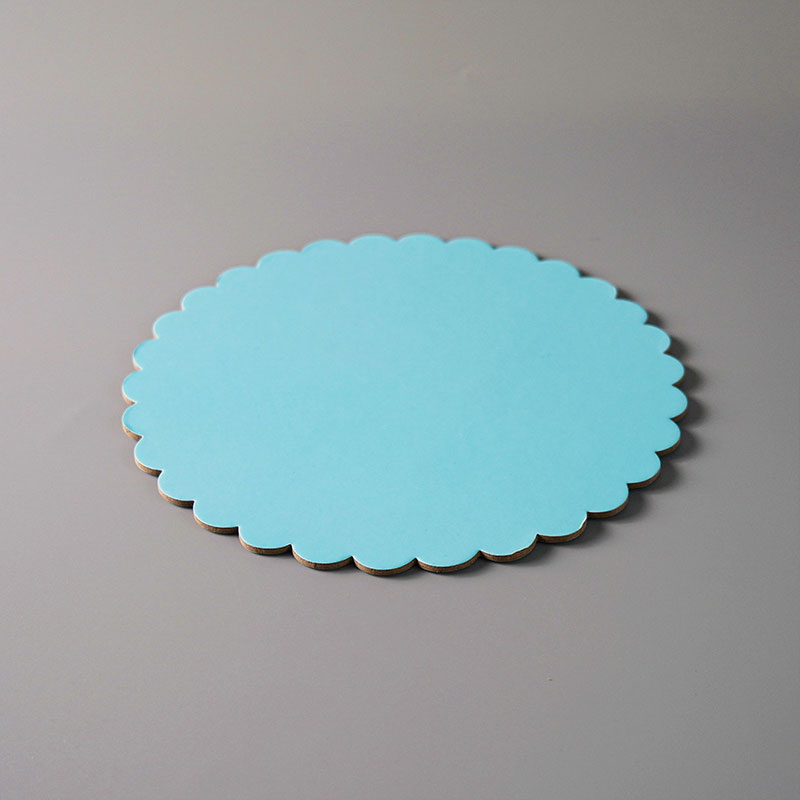
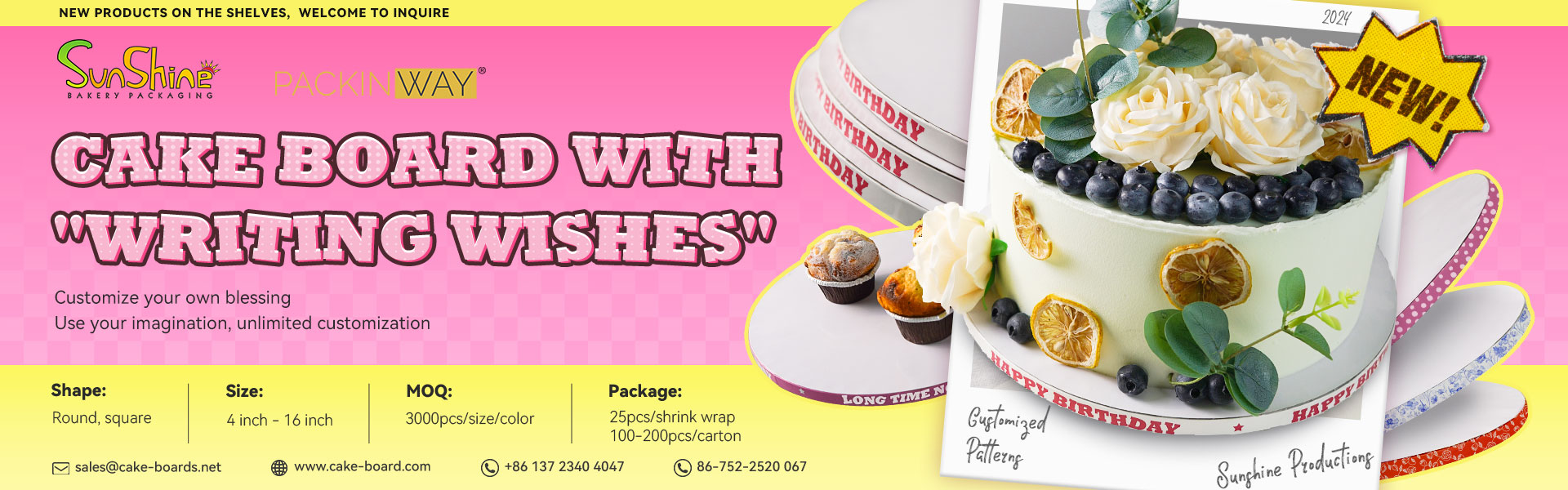
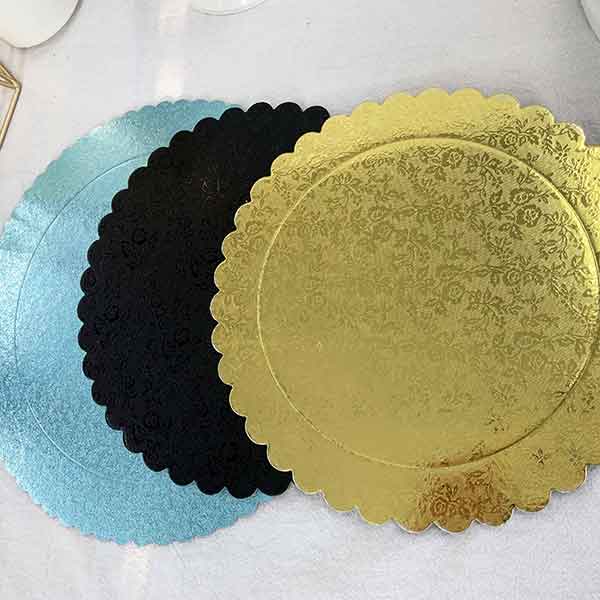
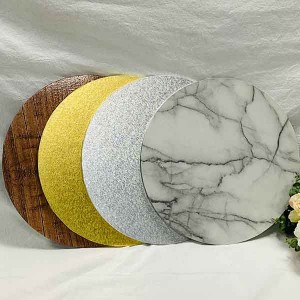
Thirdly, a cake base can make your cake look more luxurious. Furthermore, cake bases come in a variety of styles—edge printing, different textures and patterns, and even custom logo options—allowing you to perfectly match the cake's theme. A custom logo can also greatly enhance your brand image. We can roughly categorize themes into Eid al-Fitr, Christmas, birthday parties, or beach-themed cake drum designs. Finally, it's reusable. Unlike thin cake slabs that bend or become greasy after a single use, or even break, cake bases are durable enough to be reused—provided you take good care of them. Simply wipe them clean; do not use alcohol as it is highly corrosive. If you can cover the bottom with greaseproof paper, it's ready for your next cake. This is both economical and environmentally friendly! You can also cover the entire cake base with fondant.
Different Types of Cake Drums: choose what you need is suitable ?
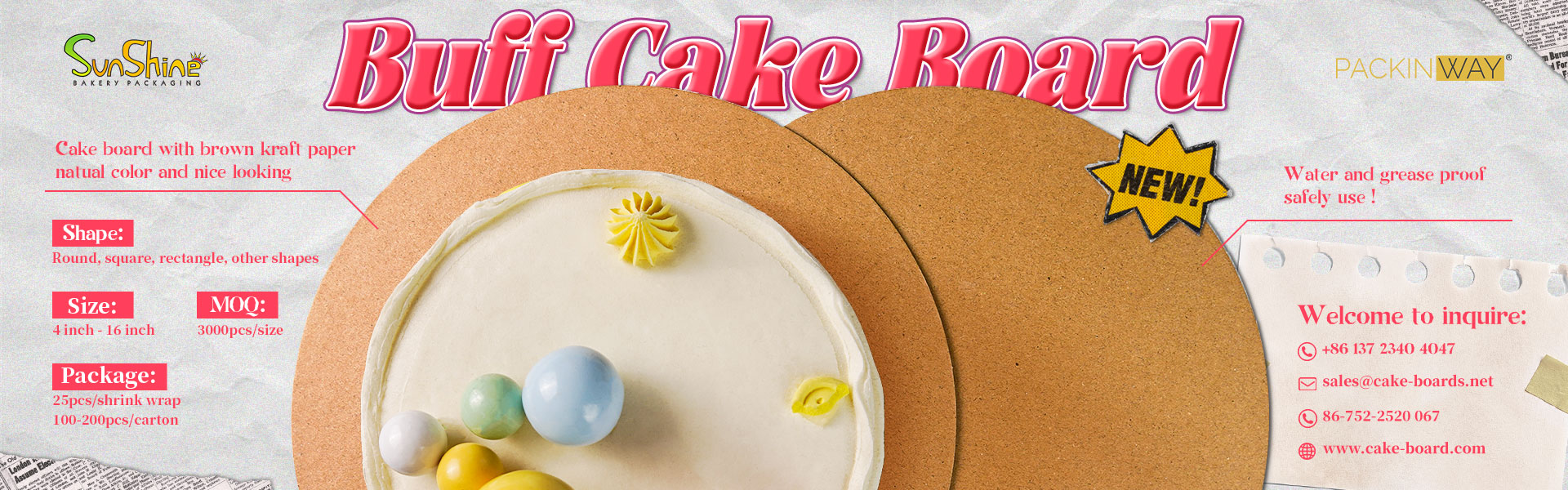
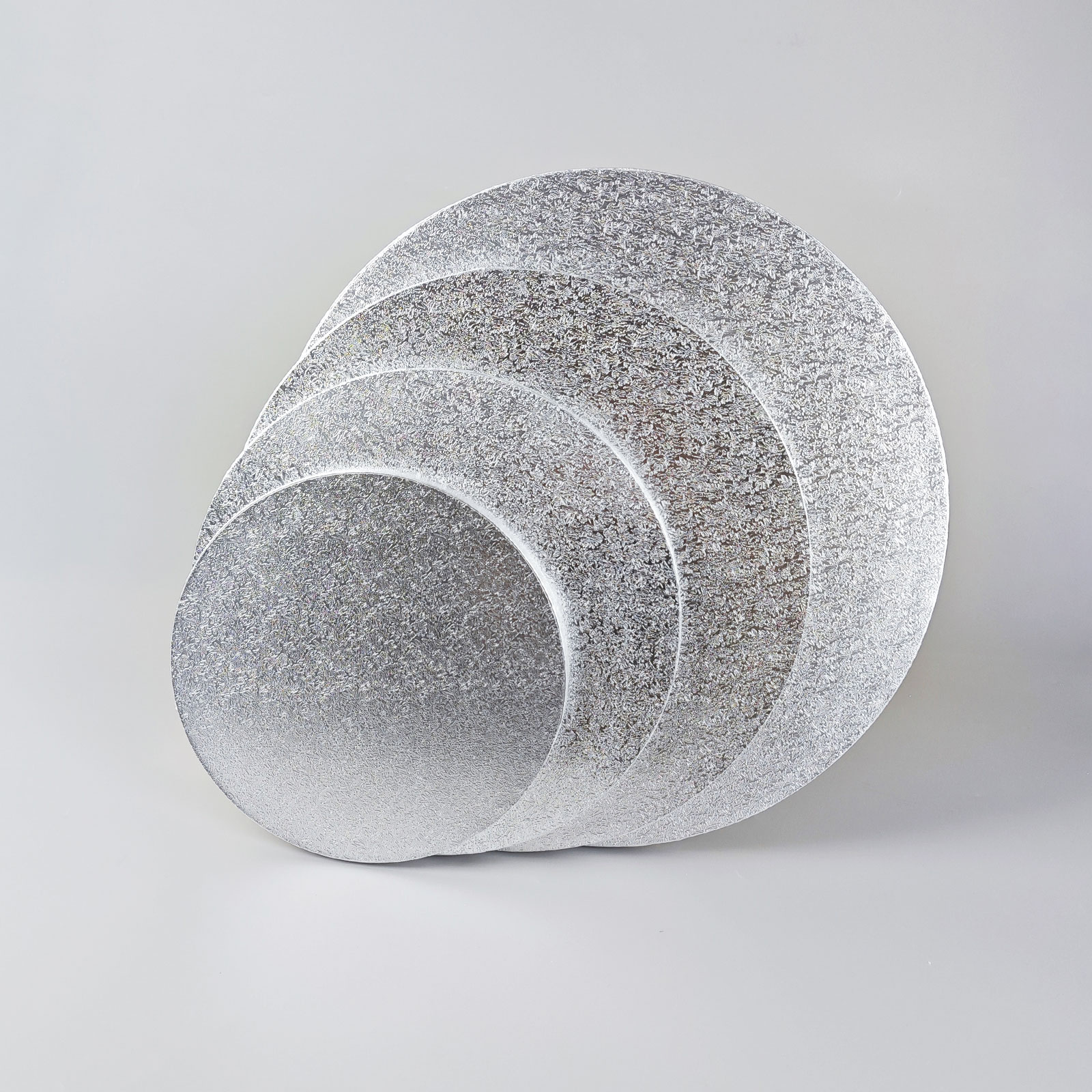
1. Cardboard Cake Drums – These are the most common and most affordable option. They’re made from multiple layers of compressed cardboard, covered in foil or paper to make them grease-resistant. They’re lightweight but sturdy enough for most cakes—think 2-3 tiered cakes, large single-layer cakes, or fruit cakes. They’re disposable (but reusable if you’re careful) and come in all sizes and colors. This is the go-to for most home bakers and small bakeries just starting out.
2. Wooden Cake Drums – If you’re making a super heavy cake (like a 4+ tiered wedding cake) or you need something extra durable (for a baking business), wooden cake drums are the way to go. They’re made from plywood layers, so they’re super strong and can hold a ton of weight. They’re also reusable—just clean them off, and they’re ready for your next big cake. The only downside? They’re a bit heavier and more expensive than cardboard ones, but they’re worth it for big projects or frequent use.
3. Plastic Cake Drums – These are waterproof and perfect for outdoor events (like pool parties or beach weddings) where moisture might be a problem. They’re durable, reusable, and easy to clean—just wipe them down with a damp cloth. They’re not as common as cardboard or wooden ones, but they’re great for specific situations. Plus, they come in clear or colored options, so you can get creative with your presentation.
4. Foam Cake Drums – These are made from foam covered in cloth or decorative paper, and they’re all about aesthetics. They’re lightweight but sturdy enough for medium-weight cakes, and they add a touch of elegance to any cake. They’re perfect for weddings or formal events where you want your cake to look extra fancy. They’re also reusable, so you can use them again for future events.
No matter which type you choose, just remember: the key is to pick a cake drum that’s slightly larger。
As iterated heretofore, should your confectionary endeavors be confined to modest, homely cakes crafted for familial consumption—those unassuming confections birthed from casual weekend baking or impromptu gatherings—a rudimentary cake stand may suffice to satiate your quotidian needs. Such a base, while functional for trivial bakes, pales in comparison to the multifarious utility of a cake drum when your aspirations transcend the domestic sphere. However, if you harbor earnest aspirations to refine your artisanal prowess, exhibit your culinary virtuosity at grand nuptials, opulent soirees, or even inaugurate your own patisserie enterprise—ventures that demand meticulous attention to both form and function—a cake drum transcends mere utility to become an indispensable linchpin of your baking repertoire, a non-negotiable adjunct that elevates your craft from amateurish to avant-garde. Its intrinsic value is not merely superficial, nor is it a perfunctory accessory; rather, it embodies a seamless synergy of robust functionality and sophisticated aesthetic enhancement, transmuting your creations from mere desserts into exquisitely curated culinary masterpieces that captivate both the palate and the eye. To elucidate its paramount significance, let us dissect the multifaceted merits that render it a worthwhile investment—one that yields tangible dividends in both structural integrity and visual allure, far surpassing the fleeting convenience of cheaper alternatives. Far beyond a mere base, it is a catalyst for elevating your craft, a silent sentinel that ensures every cake you produce exudes the polish and refinement commensurate with a seasoned patissier, even if you are still honing your skills or navigating the nuances of professional baking. Its utility extends far beyond mere stability; it is a tangible testament to your unwavering dedication to excellence, a subtle yet impactful detail that discerning clients and discerning guests alike will undoubtedly perceive, distinguishing your work from the deluge of mediocrity in the culinary landscape. In essence, the cake drum is not an extravagance to be frivolously dismissed, but a prudent investment—one that safeguards the fruits of your labor, amplifies your unique artistic vision, and distinguishes your creations in a saturated market where differentiation is the cornerstone of success. Whether you are a fledgling baker aiming to carve a niche for yourself or a seasoned professional seeking to refine your offerings and fortify your brand reputation, this humble yet robust accessory is the cornerstone of consistent, professional-quality results, justifying every cent expended in its acquisition. It is a testament to the adage that true craftsmanship lies in the details, and a cake drum, in its quiet functionality and understated elegance, is the detail that transforms a good cake into an unforgettable culinary triumph.
In short, for discerning bakers, cake bases are a simple, convenient, and cost-effective option that can add a touch of glamour to your cake creations. No matter which type you choose, just remember: the key is to pick a cake drum that’s slightly larger
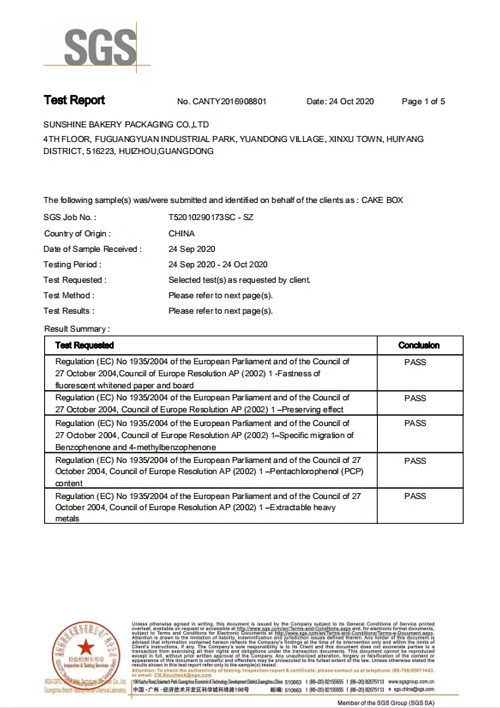
SGS
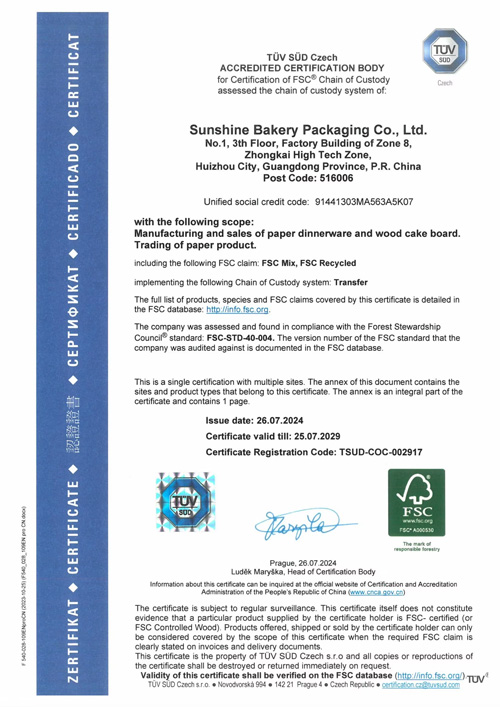
FSC
BSCI
Related Products
Post time: Apr-29-2026